


Imagine this: You're on a critical business call with a potential partner in Tokyo. They speak fluent Japanese, you speak English, and there's a multi-million dollar deal on the line. Or perhaps you're wandering through a bustling market in Barcelona, desperately trying to ask a vendor for directions, but your high school Spanish has completely abandoned you. What if you could communicate effortlessly in these moments, without fumbling through translation apps or struggling to remember basic phrases?
This isn't science fiction anymore. Translation earbuds—particularly groundbreaking devices like the Mymanu Orb, the world's first live call translation earbuds—are transforming how we communicate across language barriers. But do they actually work in real life, or are they just an impressive technological gimmick? In this comprehensive guide, we'll explore the fascinating technology behind translation earbuds, examine their real-world performance, and discover how the Mymanu Orb is revolutionizing global communication one conversation at a time.
What Are Translation Earbuds?
Translation earbuds represent a quantum leap beyond traditional wireless earbuds. While standard earbuds simply play your music or handle phone calls, translation earbuds are sophisticated wearable devices that combine high-quality audio with real-time language interpretation capabilities.
Here's what makes them special: Translation earbuds use built-in microphones to capture spoken words, advanced AI to process and translate that speech, and speakers to deliver the translation directly to your ears—all in near real-time. Unlike conventional translation apps that require you to manually type, speak into your phone, or point your camera at text, translation earbuds enable natural, flowing conversations between people who don't share a common language.
It's important to understand the distinction between translation and interpretation. Translation traditionally refers to converting written text from one language to another, while interpretation involves converting spoken language in real-time. Translation earbuds are actually performing simultaneous interpretation—a feat that once required highly trained human interpreters working in soundproof booths at international conferences.
The Evolution of Translation Technology
We've come a long way from carrying bulky phrasebooks and pointing at pictures. The journey from those simple tools to AI-powered translation earbuds represents decades of innovation:
Phase 1: Phrasebooks and Dictionaries - Heavy, limited, and requiring you to know exactly what you're looking for
Phase 2: Electronic Translators - Portable devices with pre-programmed phrases and limited vocabulary
Phase 3: Mobile Translation Apps - Google Translate and similar apps brought translation to your smartphone, but required you to stop your conversation, pull out your phone, type or speak, and wait for results
Phase 4: Translation Earbuds - The current frontier, enabling hands-free, near real-time conversations
According to recent market research, searches for translation and bone conduction earbuds surged by 35% in 2025, reflecting massive consumer interest in wearable translation technology. The reasons are clear: 76% of global consumers prefer buying from brands that communicate in their language, and 44% of international travelers cite language barriers as their top source of stress. Translation earbuds address both concerns elegantly.
The Technology Behind Translation Earbuds: How They Actually Work
The magic of translation earbuds lies in a sophisticated orchestration of hardware and artificial intelligence working in perfect harmony. Let's break down this complex process step by step.
Step 1: Speech Capture
Everything begins with capturing clear audio. Premium translation earbuds like the Mymanu Orb feature multiple high-sensitivity microphones equipped with advanced noise-cancellation algorithms. These aren't just any microphones—they're precision-engineered to isolate human speech from background noise.

Think about the acoustic challenges: you might be having a conversation in a busy airport terminal, a noisy café, or a crowded trade show. The microphone array must pick up your voice clearly while filtering out announcements, conversations, music, and ambient sounds. Modern translation earbuds use directional beamforming technology, which means the microphones focus on sound coming from specific directions (like directly in front of you) while suppressing sounds from other angles.
For the Mymanu Orb, this environmental noise cancellation is particularly sophisticated. The device can capture clear speech even in acoustically challenging environments, ensuring that the AI has the cleanest possible audio to work with in the next stage.
Step 2: Voice-to-Text Conversion
Once your voice is captured, it must be converted from sound waves into digital signals that computers can understand. This process is called Automatic Speech Recognition (ASR), and it's far more complex than you might imagine.
ASR systems don't just detect sounds—they interpret them as specific words and phrases by matching audio patterns against massive databases of linguistic data. Modern ASR has improved dramatically thanks to machine learning. Studies show that under ideal conditions, today's best ASR systems achieve near-human performance, with accuracy rates often exceeding 95%.
However, ASR faces real challenges:
- Regional Accents: Spanish spoken in Spain sounds very different from Spanish in Mexico or Argentina
- Background Noise: Even with microphone filtering, noisy environments make word recognition harder
- Speaking Patterns: Fast speech, mumbling, or unclear pronunciation can confuse the system
- Homophones: Words that sound alike but have different meanings
Advanced translation earbuds like the Mymanu Orb are continuously learning to handle these variations. The AI recognizes diverse regional accents and adapts to different speaking styles, making the transcription as accurate as possible before moving to the next stage.
Step 3: AI-Powered Translation
This is where the real magic happens. Once your speech has been converted to text, sophisticated AI algorithms interpret the words and translate them into the target language. But this isn't simple word-for-word replacement—modern Natural Language Processing (NLP) is far more nuanced.
How AI Translation Works:
Neural Networks: Translation earbuds use neural machine translation (NMT), which employs deep learning models trained on billions of sentences across multiple languages. These models don't just memorize translation pairs—they learn the underlying patterns and structures of language.
Context Awareness: Modern AI understands context. The word "bank" means something different in "I went to the bank" versus "I sat on the river bank." Advanced systems like those in the Mymanu Orb analyze the surrounding words to determine the correct meaning and choose the appropriate translation.
Grammar and Syntax: Different languages have different grammatical structures. In English, we say "the red car," but in Spanish, it's "el coche rojo" (literally "the car red"). The AI must restructure sentences to match the target language's rules.
Idioms and Cultural Expressions: This remains one of the biggest challenges. When someone says "it's raining cats and dogs," translation earbuds must recognize this as an idiom meaning heavy rain, not a literal meteorological phenomenon involving animals.
Continuous Improvement: Translation earbuds with cloud connectivity, like the Mymanu Orb, benefit from ongoing updates. As more people use these devices, the AI systems learn from millions of conversations, continuously improving their accuracy and handling of edge cases.
Current data suggests that modern AI translation earbuds achieve accuracy rates between 90-98% for common language pairs under ideal conditions. However, this performance varies significantly based on several factors we'll explore later.
Step 4: Text-to-Speech Synthesis
After translation, the text must be converted back into natural-sounding speech. This is called text-to-speech (TTS) synthesis, and modern systems are remarkably sophisticated.
Gone are the days of robotic, stilted voices. Today's TTS technology produces natural-sounding speech with appropriate intonation, emotion, and rhythm. The systems consider:
- Pronunciation rules for the target language
- Natural speech patterns including pauses and emphasis
- Tone matching to preserve the speaker's intended emotion
- Speed optimization for clear comprehension
The goal is to make the translated speech sound as natural as possible, maintaining the conversational flow rather than disrupting it with obviously artificial voices.
Step 5: Real-Time Playback and Full-Duplex Communication
Finally, the translated audio is delivered through the earbud speakers. In basic systems, there's a clear back-and-forth rhythm: one person speaks, translation happens, the other person responds, translation happens again.
However, advanced devices like the Mymanu Orb support full-duplex translation, meaning they can handle simultaneous speaking and listening. This allows for more natural conversation flow, where people can interrupt, ask clarifying questions, or respond naturally—much closer to how we actually communicate.
The entire process—from speech capture through playback—typically takes 1-2 seconds in modern translation earbuds. While there's still a noticeable lag compared to instant human comprehension, it's remarkably fast considering the complex processing involved.
The Infrastructure Behind It All
Modern translation earbuds rely on several supporting technologies:
Bluetooth 5.4 Connectivity: Provides stable, low-energy wireless connection to your smartphone, maintaining continuous communication throughout extended conversations.
Cloud Processing vs. On-Device Translation: Most high-quality translation happens in the cloud, leveraging powerful servers to handle the computational demands. However, many earbuds, including the Mymanu Orb, are moving toward hybrid systems with offline capabilities for basic language pairs.
Companion Apps: Smartphone applications serve as the control center, allowing you to select languages, adjust settings, and access advanced features.
Continuous Updates: Cloud-connected devices receive regular linguistic updates, staying current with evolving language usage, slang, and new expressions.
Mymanu Orb: Revolutionizing Live Call Translation
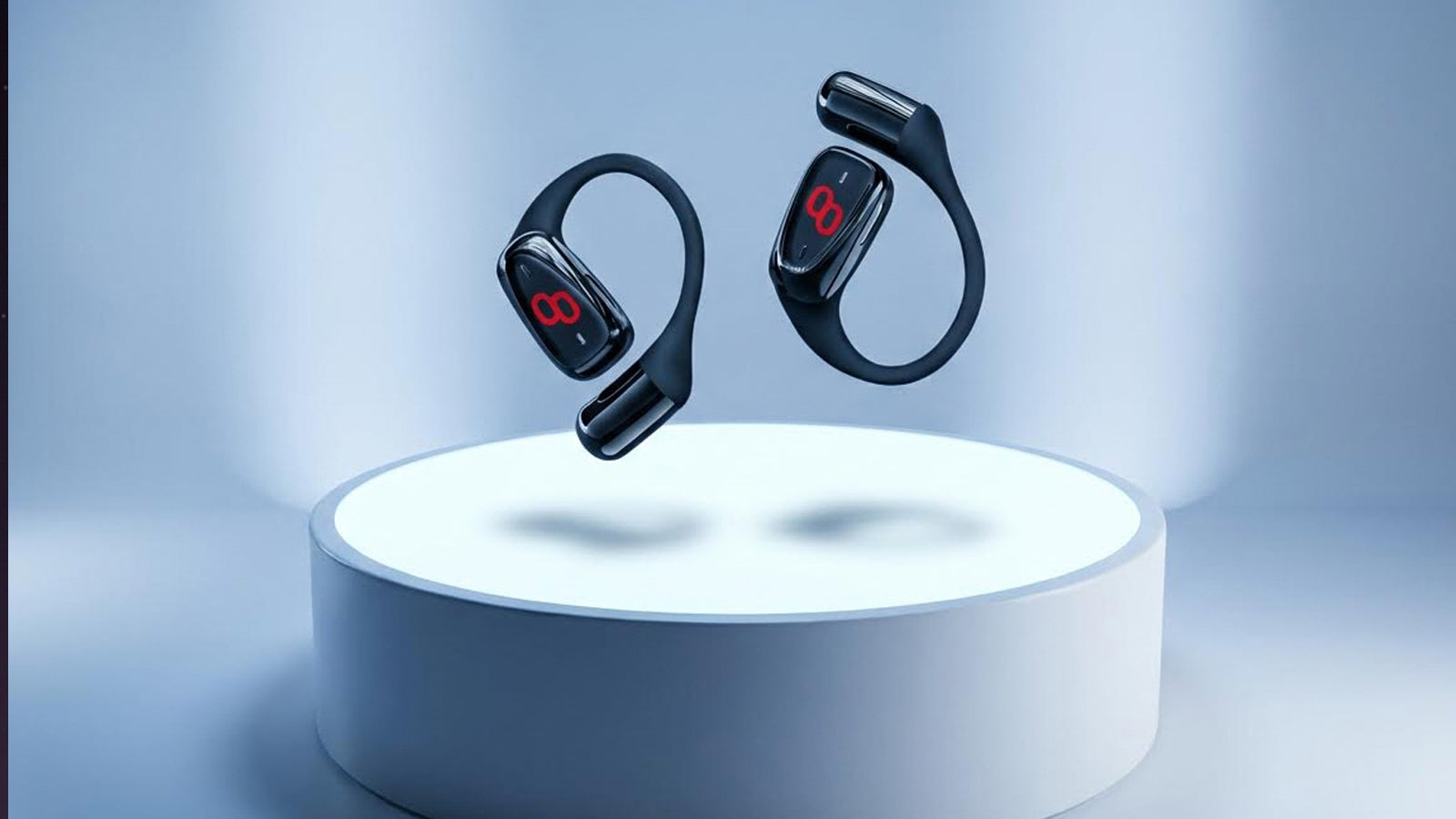
While many translation earbuds excel at face-to-face conversations, the Mymanu Orb achieves something unprecedented: it's the world's first open-ear earbuds featuring live call translation across multiple languages. This distinction is more significant than it might initially appear.
What Makes Live Call Translation Different?
Traditional translation earbuds work wonderfully when two people are physically present, each wearing their own device or using a shared smartphone. But phone conversations introduce entirely new challenges:
Audio Quality Variations: Phone calls compress audio, especially on older networks or poor connections. The translation AI must handle lower-quality sound while maintaining accuracy.
Single Audio Stream: During a call, there's only one audio stream coming through the phone line. The earbuds must distinguish between when you're speaking versus when the other person is speaking, all while managing the translation process.
Platform Compatibility: The translation must work seamlessly whether you're on a landline, mobile phone, WhatsApp, Zoom, Microsoft Teams, or any other communication platform.
Real-Time Bidirectional Processing: Both sides of the conversation need simultaneous translation, creating complex processing demands.
The Mymanu Orb solves these challenges through proprietary AI technology that integrates directly into the phone call experience, delivering seamless bidirectional translation without interrupting the natural flow of conversation.
How Mymanu Orb Works
At the heart of the Mymanu Orb's capabilities is cutting-edge AI-driven natural language processing specifically optimized for phone conversations. Here's what sets it apart:
Intelligent Audio Separation: The Orb's AI can distinguish between your voice and the voice coming through the phone, ensuring accurate translation of each speaker separately.
Context-Aware Processing: During longer conversations, the AI maintains context across multiple exchanges, improving accuracy as the conversation progresses.
Regional Accent Recognition: The system recognizes and adapts to various regional accents and dialects within languages. Mexican Spanish, Castilian Spanish, and Argentine Spanish all sound different—the Orb handles these variations gracefully.
Cloud-Based Continuous Learning: With real-time cloud updates, the Orb stays synchronized with evolving language usage, incorporating new terminology, slang, and expressions as they emerge.
Noise Resistance: Even in noisy environments, the Orb's voice recognition technology performs remarkably well, isolating the speaker's voice from background interference.
Key Features That Deliver Real-World Performance
Extensive Language Support: The Mymanu Orb supports over 40 languages and dialects, covering the vast majority of global business and travel needs. From English, Spanish, and Mandarin to Arabic, Japanese, French, German, and dozens more, the coverage is comprehensive.
Revolutionary Open-Ear Design: Unlike traditional in-ear earbuds that block your ear canal, the Orb's open-ear design sits outside your ear canal. This provides two crucial advantages:
- Situational Awareness: You remain aware of your surroundings—essential for safety while walking, driving, or navigating unfamiliar places
- All-Day Comfort: No pressure, no ear fatigue, no "plugged" sensation during extended calls
Professional Audio Quality: High-definition sound ensures that both your music and your translated conversations come through crystal clear. The audio processing is optimized for human speech, making translated voices natural and easy to understand.
Reliable Battery Life:
- Up to 6 hours of continuous call time
- 100 hours of standby time
- Quick charging capability
- Compact charging case with color touchscreen adds extra hours
Modern Connectivity: Bluetooth 5.4 technology provides stable connections up to 32 feet away with minimal dropouts or interference.
Intuitive Controls:
- Touch controls for volume, playback, and call management
- Easy language switching
- Companion app for detailed settings
- Voice assistant support
Built for Real Life: With IPX5 water resistance, the Orb handles sweat, rain, and splashes without missing a beat—perfect for professionals on the go or travelers facing unpredictable weather.
Real-World Applications of Live Call Translation
The practical applications of Mymanu Orb's live call translation capabilities are transformative:
International Business Communications: Conduct sales calls with overseas clients, participate in multilingual conference calls, negotiate with international partners—all without the expense or scheduling complexity of professional interpreters. The Orb eliminates language as a barrier to global business growth.
Remote Work Revolution: In an era where teams span continents and time zones, the ability to communicate clearly across languages becomes essential. Take video calls, participate in virtual meetings, and collaborate on projects with colleagues who speak different languages.
Customer Service Excellence: Companies serving international customers can provide support in the customer's native language, building trust and satisfaction while reducing misunderstandings.
Family Connections: Stay connected with relatives abroad, whether it's regular check-ins with grandparents, coordinating family events, or simply sharing life's daily moments across language barriers.
Travel and Navigation: While exploring foreign countries, call hotels, restaurants, tour operators, or local services with confidence. Book reservations, ask questions, and solve problems—all in real time.
Language Learning Support: Practice speaking with native speakers, build confidence through real conversations, and accelerate your learning by engaging authentically rather than rehearsing canned phrases.
Real-World Performance: Do Translation Earbuds Actually Work?
This is the critical question: beyond the impressive technology, do translation earbuds deliver in actual, everyday situations? The honest answer is: yes, with important caveats.
Understanding Accuracy Rates
When manufacturers claim 90-98% accuracy, what does that actually mean? Let's break it down:
Ideal Conditions = Higher Accuracy: Under optimal circumstances—quiet environment, clear speech, common language pairs, standard accent—modern translation earbuds can indeed achieve 95%+ accuracy. This means that in a 100-word conversation, only 5 words might be mistranslated or missed.
Real-World Variables Reduce Accuracy: In practice, several factors can lower performance:
Language Pair Complexity: Common pairings like English-Spanish or English-French benefit from extensive training data and relatively similar grammatical structures, often achieving 90-95% accuracy. More distant pairs like English-Thai or English-Arabic might hover around 80-85% due to fundamental structural differences and less training data.
Accent and Dialect Variations: Even within a single language, regional variations matter significantly. Research shows that translation systems perform best with standardized national variants (like "neutral" American English or Castilian Spanish) and struggle more with regional dialects, thick accents, or minority language variants.
Environmental Noise: Background noise remains one of the biggest challenges. While microphone technology has improved dramatically, a busy airport terminal, crowded restaurant, or construction site can reduce accuracy by 15-20% compared to a quiet room.
Speaking Style: Clear, moderate-paced speech (around 140-160 words per minute) yields the best results. Rapid-fire speech, mumbling, heavy vocal fry, or extreme pitch variations can all confuse the system.
Context and Complexity: Simple, direct sentences translate more accurately than complex, nested clauses. Abstract concepts, technical jargon, and culturally specific references pose greater challenges.
What Translation Earbuds Do Exceptionally Well
Despite these limitations, translation earbuds excel in numerous real-world scenarios:
1. Everyday Travel Conversations
Translation earbuds shine brightest in typical travel situations:
- Asking for directions from locals
- Ordering food at restaurants
- Shopping and negotiating prices at markets
- Checking into hotels and asking about amenities
- Requesting help or information from service workers
- Making small talk with new acquaintances
These interactions typically involve concrete, practical language with clear context. Success rates in these scenarios often exceed 90%, making translation earbuds genuinely useful tools for travelers.
2. Basic to Moderate Business Communications
For many professional scenarios, translation earbuds perform admirably:
- International client calls discussing straightforward topics
- Sales presentations with visual support
- Team check-ins and status updates
- Coordination meetings about logistics and schedules
- Customer service interactions
- Initial business introductions and relationship building
Companies report significant time and cost savings by using translation earbuds for routine international communications, reserving human interpreters only for critical, complex negotiations.
3. Cultural Exchange and Social Connection
Perhaps the most rewarding application is enabling authentic human connection:
- Having meaningful conversations with locals while traveling
- Building friendships with people from different linguistic backgrounds
- Participating in community events or social gatherings
- Sharing stories, experiences, and perspectives across cultures
- Learning about different ways of life through direct conversation
Users consistently report that even with occasional translation hiccups, translation earbuds enable connection and understanding that simply wouldn't happen otherwise.
Where Translation Earbuds Struggle
Being realistic about limitations helps set appropriate expectations:
1. Environmental Challenges
Severe Background Noise: Extremely loud environments like industrial facilities, nightclubs, or busy construction sites can overwhelm even the best noise-cancellation technology. Accuracy drops significantly when the system can't isolate speech clearly.
Poor Connectivity: Most high-quality translation requires internet access. In areas with weak cellular signals or unreliable Wi-Fi—remote locations, underground venues, or during flights—performance suffers substantially.
Acoustic Difficulties: Large conference rooms with echo, outdoor spaces with wind noise, or venues with multiple simultaneous conversations can all degrade performance.
2. Content Complexity
Technical and Specialized Language: Fields with precise terminology—medicine, law, engineering, finance—pose significant challenges. Misinterpreting "malignant" versus "benign" or "liable" versus "libel" could have serious consequences.
Slang and Colloquialisms: Regional expressions, cultural references, and current slang often confuse translation systems. A phrase like "she threw shade" or "that's fire" might be translated literally rather than idiomatically.
Rapid or Interrupted Speech: When people speak over each other, interrupt frequently, or talk extremely fast, translation accuracy plummets. The system works best with deliberate, turn-based conversation.
Multiple Speakers: Group conversations with three or more people speaking different languages simultaneously overwhelm most translation systems, which are optimized for two-party exchanges.
3. Nuance and Context
Humor and Sarcasm: These heavily context-dependent modes of speech rarely translate effectively. What's funny in one culture might be confusing or offensive in another, and translation earbuds aren't yet sophisticated enough to navigate these subtleties reliably.
Formality and Politeness Levels: Many languages have complex systems for expressing respect, formality, and social hierarchy. Japanese, Korean, and Arabic, for example, have multiple ways to express the same basic idea depending on the social relationship between speakers. Translation systems often default to neutral formality, potentially missing important social cues.
Ambiguity and Wordplay: Puns, double meanings, and deliberately ambiguous language rarely survive translation. The AI typically picks one meaning and moves on.
Setting Realistic Expectations
Research data supports a pragmatic view: modern translation earbuds like the Mymanu Orb genuinely work for approximately 90% of everyday cross-language communication needs. They're invaluable for:
- Travel and tourism
- Basic business communication
- Social interaction and cultural exchange
- Language learning support
- Routine customer service
However, they're not yet ready to replace human interpreters for:
- Legal contracts and negotiations
- Medical consultations and diagnoses
- Complex technical discussions
- High-stakes business negotiations
- Any situation requiring legally binding documentation
- Contexts where even small misunderstandings could have serious consequences
As Dr. Lena Park, a computational linguist at the University of Edinburgh, observes in her research on neural translation models, AI systems excel at statistical pattern matching but still lack the deep cultural knowledge and contextual reasoning that human interpreters bring to complex, high-stakes communication.
Who Benefits Most from Translation Earbuds?
Translation earbuds aren't for everyone, but they're transformative for specific users and situations:
International Business Professionals
If you regularly conduct business across languages, translation earbuds can be game-changing:
Global Sales Teams: Close deals with international clients without language constraints. Make cold calls, conduct discovery meetings, and present proposals in the prospect's native language.
Remote Workers with International Clients: Participate effectively in virtual meetings, take calls while traveling, and build relationships across language barriers.
Entrepreneurs Expanding Globally: Explore new markets, vet international suppliers, and establish partnerships without the expense of full-time interpreters.
Customer Service Representatives: Provide support to international customers with greater empathy and clarity, improving satisfaction scores and reducing resolution times.
The cost savings alone make translation earbuds attractive for businesses. Professional interpreters can charge $50-200 per hour or more. Translation earbuds like the Mymanu Orb represent a one-time investment that provides unlimited translation capability.
Travelers and Globetrotters
For people who love to explore the world, translation earbuds provide freedom and confidence:
Solo Travelers: Navigate unfamiliar cities, engage with locals authentically, handle emergencies, and discover off-the-beaten-path experiences without language anxiety.
Adventure Seekers: Whether trekking in Nepal, exploring markets in Morocco, or island-hopping in Indonesia, communicate with guides, locals, and service providers effortlessly.
Digital Nomads: Work remotely from different countries while integrating into local communities, making friends, and building a global network.
Frequent Business Travelers: Maximize productivity by handling calls in any language while moving between airports, hotels, and meeting venues.
The Mymanu Orb's open-ear design is particularly valuable for travelers, allowing them to stay aware of announcements, traffic, and other environmental cues while still understanding translated conversations.
Language Learners
Translation earbuds support language acquisition in powerful ways:
Real-World Practice: Move beyond textbooks and apps to engage in actual conversations with native speakers, accelerating comprehension and building practical fluency.
Confidence Building: The safety net of translation reduces anxiety about making mistakes, encouraging learners to practice more frequently and adventurously.
Contextual Learning: Understanding how native speakers use language in real situations provides insights that formal study often misses.
Pronunciation Feedback: Hearing accurate native pronunciation helps learners develop better accents and speaking patterns.
Multilingual Families and Communities
International Families: Grandparents and grandchildren separated by language can communicate meaningfully. Families with members who speak different native languages can understand each other better.
Community Organizations: Cultural centers, religious organizations, and community groups serving diverse populations can facilitate better communication and inclusion.
Healthcare and Social Services: Providers can communicate more effectively with patients and clients from different linguistic backgrounds, improving care quality and trust.
When NOT to Use Translation Earbuds
Honesty about limitations is essential. Translation earbuds are NOT appropriate for:
Legal Matters: Contract negotiations, court proceedings, legal consultations, or any situation creating binding legal obligations require certified human interpreters and official translations.
Medical Contexts: Diagnosis discussions, treatment explanations, informed consent, or emergency medical situations demand the precision and accountability that only human medical interpreters provide.
Complex Technical Work: Engineering specifications, scientific research collaboration, or technical troubleshooting in specialized fields require domain expertise that current AI lacks.
High-Stakes Negotiations: When millions of dollars, critical partnerships, or strategic decisions hang in the balance, the risk of misunderstanding from even a 5% error rate is unacceptable.
Situations Requiring Documentation: Any conversation that must be recorded, transcribed, or certified for official purposes needs human interpretation with proper credentials.
Setting Up and Using Translation Earbuds Effectively
Success with translation earbuds requires more than just pairing them to your phone. Here's how to optimize your experience:
Initial Setup Best Practices
Choose Your Languages Wisely: Download offline language packs for your most common translation needs before traveling to areas with poor connectivity.
Test Before You Need Them: Don't wait until you're in a critical conversation to discover how your earbuds work. Practice with friends, language partners, or even by calling businesses that speak your target language.
Calibrate Your Microphone: Most companion apps offer microphone testing. Ensure your earbuds are picking up your voice clearly and distinguishing it from background noise.
Understand Your Settings: Familiarize yourself with different translation modes (touch mode for quick exchanges, free talk for extended conversations, offline mode for connectivity-challenged areas).
Update Regularly: Keep your firmware and app updated to benefit from the latest improvements in translation accuracy and features.
Speaking Techniques for Best Results
Research and real-world testing reveal specific speaking patterns that maximize translation accuracy:
Moderate Your Pace: Aim for 140-160 words per minute—slightly slower than natural conversation but not artificially slow. This gives the ASR system time to process clearly.
Enunciate Clearly: You don't need to exaggerate, but clear pronunciation helps enormously. Avoid mumbling, vocal fry, or extreme pitch variations.
Use the Two-Second Rule: Pause briefly (about two seconds) between sentences. This helps the system recognize when you've finished a thought and is ready to translate.
One Speaker at a Time: Avoid talking over each other. The ping-pong rhythm of "speak, translate, listen, respond" feels awkward at first but becomes natural with practice.
Simplify Complex Ideas: In critical conversations, express complex concepts using simpler, more direct language. Instead of "We're exploring the feasibility of implementing a synergistic partnership framework," try "We want to understand if we can work together successfully."
Avoid Idioms in Important Contexts: Save colorful expressions for casual conversation. In business or important discussions, use literal language that translates more reliably.
Speak in Complete Sentences: Fragments and incomplete thoughts confuse translation systems. Finish your sentences for better accuracy.
Environmental Optimization
Choose Quiet Locations: When possible, have important translated conversations in quieter spaces. Step away from noisy areas into lobbies, quiet corners, or private rooms.
Position Strategically: Face your conversation partner directly when they're speaking. The directional microphones work best when pointed toward the sound source.
Ensure Connectivity: Check that you have a strong internet connection before important calls. If you're in an area with poor service, switch to offline mode if available.
Manage Background Audio: Turn off music, television, and other competing audio sources in your vicinity.
Use External Microphones When Needed: Some translation earbuds, like AirPods with Live Translation, can leverage your phone's microphones in addition to the earbud microphones in very noisy environments. Moving your phone closer to your conversation partner can improve accuracy.
Verification Strategies
Even with 95% accuracy, the 5% that's wrong could be critical. Use these strategies to verify understanding:
Request Paraphrasing: After receiving a translation, ask your conversation partner to rephrase what they understood in their own words. This confirms whether the meaning came through correctly.
Provide Context in Advance: For important calls or meetings, share key documents, agendas, or glossaries beforehand. This gives everyone shared context that reduces ambiguity.
Use Visual Support: When possible, supplement your translated conversation with images, diagrams, or written materials that clarify meaning.
Designate a Context Anchor: In professional settings, if someone on your team speaks both languages (even at a basic level), have them monitor the conversation and flag any obvious translation errors or logical inconsistencies.
Confirm Critical Details: For important information like dates, times, prices, or specifications, confirm these details explicitly and consider following up in writing after the conversation.
The Future of Translation Technology
Translation earbuds are evolving rapidly. Here's what's on the horizon:
Emerging Innovations
Expanded Offline Capabilities: Future devices will offer more languages available offline with accuracy approaching online performance, making translation reliable even in remote areas.
Enhanced Accent Recognition: Machine learning models will continue improving their ability to handle diverse accents, dialects, and speaking styles, including non-native speakers with strong accents.
Augmented Reality Integration: Imagine translation earbuds that work seamlessly with AR glasses, displaying translated text visually while also delivering audio translation, or even translating written signs and menus you're looking at.
Domain-Specific Translation Modes: Future systems might offer specialized modes optimized for medical, legal, technical, or business contexts, using vocabulary and phrasing specific to those fields.
Reduced Latency: As processing power increases and algorithms become more efficient, the delay between speech and translation will shrink toward true real-time performance.
Emotion and Tone Preservation: Next-generation systems will better capture and convey emotional nuance, sarcasm, humor, and other paralinguistic features that make communication truly human.
Market Trends and Industry Evolution
The translation earbud market is reaching an inflection point. Major manufacturers like Samsung, Google, and Apple are integrating translation features into their mainstream earbuds. The Samsung Galaxy Buds3 Pro includes AI language translation with their Interpreter feature. Google Pixel Buds have long offered tap-to-translate functionality. Apple's anticipated addition of live translation to AirPods would bring the technology to millions more users.
This mainstream adoption validates the concept while creating competitive pressure that benefits consumers through:
- More competitive pricing
- Faster innovation cycles
- Better integration with existing device ecosystems
- Improved user experiences as companies compete on quality
Simultaneously, specialized devices like the Mymanu Orb continue pushing boundaries with features that general-purpose earbuds don't prioritize—like live call translation and open-ear designs optimized specifically for bilingual communication.
The Enduring Human Element
Despite remarkable technological progress, it's crucial to remember that translation technology complements rather than replaces human connection and expertise.
Professional human interpreters bring irreplaceable value:
- Deep cultural knowledge and context
- Ability to navigate ambiguity and nuance
- Understanding of professional ethics and confidentiality
- Capacity to handle truly complex, high-stakes situations
- Accountability and certification for official purposes
Translation earbuds democratize cross-language communication, making it accessible for everyday situations where hiring an interpreter would be impractical or prohibitively expensive. They empower individuals to explore the world, build relationships, and conduct business across language barriers with unprecedented ease.
Mymanu's Vision for the Future
Mymanu remains committed to continuous innovation in translation technology. Planned updates for the Orb include offline translation support, enhanced voice recognition for diverse accents, and integration with emerging platforms to further enrich user experiences.
As founder Danny Manu articulates: "Orb represents our mission to eliminate language barriers through innovative technology. We're creating tools that unite people, regardless of their native language."
This vision extends beyond technical features to the broader impact of enabling human connection—helping business professionals expand globally, travelers explore authentically, language learners grow confidently, and families stay connected across borders.
Making the Decision: Are Translation Earbuds Right for You?
After examining how translation earbuds work and their real-world performance, the final question is whether they fit your specific needs.
Evaluate Your Situation
Frequency of International Communication: Do you regularly interact with people who speak different languages? If you travel internationally monthly, work with overseas clients weekly, or have family abroad, translation earbuds offer substantial value. For someone who encounters language barriers only occasionally, the investment might be harder to justify.
Types of Conversations: Are your multilingual interactions primarily casual and conversational, or do they involve complex technical or legal matters? Translation earbuds excel at the former but struggle with the latter.
Language Pairs You Need: Check whether your specific languages are well-supported. Common pairs like English-Spanish, English-French, or English-Mandarin generally perform better than rare language combinations.
Your Budget: Quality translation earbuds range from around $100 to $300+. Consider this against the cost of alternatives—hiring interpreters, delaying international opportunities, or struggling through language barriers on your own.
Your Environment: If you work in extremely noisy settings or areas with poor connectivity, you might need to adjust your expectations or choose specific models with strong offline capabilities.
What to Look For in Translation Earbuds
Comprehensive Language Support: Ensure the device covers all languages you need, with special attention to dialects and regional variants.
Offline Functionality: If you travel to remote areas or face connectivity challenges, offline translation for your most-used language pairs is essential.
Battery Life: For professionals taking long calls or travelers on extended adventures, battery life matters significantly. Look for devices offering 6+ hours of active use.
Audio Quality: Don't sacrifice sound quality for translation features. Premium earbuds should deliver excellent audio for both translation and music/media.
Comfort: If you'll wear them for hours daily, comfort is paramount. The open-ear design of the Mymanu Orb addresses this specifically.
App Ecosystem: A well-designed companion app makes setup, customization, and language management much easier.
Update Frequency: Choose devices from manufacturers committed to ongoing software improvements and linguistic updates.
Customer Support: Access to responsive customer service can make the difference when you encounter setup issues or technical problems.
Why the Mymanu Orb Stands Out
Among translation earbuds, the Mymanu Orb offers distinctive advantages:
World's First Live Call Translation: This isn't just a marketing claim—it's a genuinely unique capability that extends translation beyond face-to-face into the critical realm of phone and video calls.
Open-Ear Safety and Comfort: The ergonomic open-ear design provides all-day comfort and environmental awareness that sealed earbuds can't match.
Professional-Grade Features: HD audio, IPX5 water resistance, 6-hour call time, Bluetooth 5.4, and comprehensive controls make it suitable for serious professional use.
40+ Language Support: Coverage of major world languages plus regional variants ensures the Orb handles most global communication needs.
AI That Keeps Improving: Cloud connectivity means the Orb's translation intelligence continuously improves based on real-world usage patterns.
Versatility: Beyond translation, the Orb serves as excellent everyday earbuds for music, podcasts, and standard calls.
The Investment Perspective
Consider translation earbuds not just as a gadget purchase but as an investment in:
Global Opportunities: How many business opportunities, travel experiences, or relationships have you missed due to language barriers?
Time Savings: Eliminating the need to coordinate interpreter schedules or struggle through language apps saves countless hours.
Independence and Confidence: The freedom to navigate foreign countries, take international calls, or engage with diverse communities without language anxiety is genuinely empowering.
Cost Avoidance: A single interpreter session often costs more than quality translation earbuds. The device pays for itself quickly if you use it regularly.
For most people regularly facing language barriers—whether for work, travel, or personal connection—quality translation earbuds like the Mymanu Orb deliver clear value that justifies their cost many times over.
Conclusion: The Reality of Translation Earbuds
So, do translation earbuds actually work in real life? The evidence is clear: yes, they genuinely work for the vast majority of everyday cross-language communication scenarios.
Are they perfect? No. Current technology still has meaningful limitations around environmental noise, content complexity, cultural nuance, and specialized terminology. Accuracy varies based on language pairs, speaking patterns, and context. In critical professional or legal situations, human interpreters remain essential.
But for approximately 90% of the language barriers people encounter—travel conversations, basic business calls, social interactions, customer service, and cultural exchange—modern translation earbuds like the Mymanu Orb perform remarkably well. They're not science fiction or gimmicks; they're practical tools that genuinely break down communication barriers.
The technology continues improving rapidly. Each generation of translation earbuds becomes more accurate, supports more languages, handles more complex scenarios, and delivers more natural conversations. The Mymanu Orb, as the world's first live call translation earbuds, represents the cutting edge of this evolution, pioneering capabilities that will become standard in the years ahead.
For international business professionals, frequent travelers, language learners, and anyone who regularly encounters language barriers, translation earbuds aren't just useful—they're transformative. They provide freedom, confidence, and connection that simply wasn't possible before.
The future is multilingual communication without barriers. That future isn't arriving someday—it's here now, available in a device you can wear comfortably all day while staying connected to both your conversations and your surroundings.
Ready to experience seamless global communication? Discover how the Mymanu Orb can transform your international calls, travel adventures, and cross-cultural connections. Visit Mymanu.com to explore the world's first live call translation earbuds and break language barriers for good.
FAQs
Got a question? We are here to answer
Share:
Mymanu ORB: Revolutionising Communication with the World's First Live Call Translation Open-Ear Earbuds
Translation Earbuds in 2026: The Complete Buyer's Guide