



Translation Earbuds in 2026: The Complete Buyer's Guide to Real-Time, Open-Ear, and Live Call Translation
There are roughly 7,168 living languages spoken across the world today, according to Ethnologue. Yet most of us speak fluently in just one or two. For decades, that gap has been bridged by phrasebooks, awkward gestures, and — more recently — translation apps that force us to stare at a phone screen mid-conversation, breaking eye contact and any chance of a genuine connection.
Translation earbuds change that equation entirely.
In 2026, real-time translation earbuds have matured from a curious novelty into a genuinely useful daily tool. They sit invisibly in your ears, listen to the person speaking, translate their words into your language within fractions of a second, and play that translation back without ever pulling you out of the moment. The best models go further: they translate live phone calls, work seamlessly with apps like Zoom and WhatsApp, and respect your ability to hear the world around you.
This guide is the most thorough resource you'll find on translation earbuds today. We'll cover how they actually work, the breakthrough technologies separating the leaders from the pretenders, the nine features that matter most when buying, and how to pick the right pair for travel, business, or everyday life. We'll also explore why a new generation of open-ear translation earbuds — and the arrival of live call translation — is quietly reshaping the entire category.
By the end, you'll know exactly what to look for, what to avoid, and which model genuinely lives up to the marketing.
What Are Translation Earbuds and How Do They Actually Work?
Translation earbuds are wireless earphones with embedded — or app-linked — artificial intelligence that captures spoken language, converts it to text, translates it, then speaks the result back to you in your chosen language. The aim is to make multilingual conversation feel as natural as monolingual conversation. No pauses. No phone in your hand. No theatrical exchanges of "wait, let me check Google."
The category sits at the intersection of three rapidly improving technologies:
- Automatic Speech Recognition (ASR) — turning the spoken word into accurate text, even with accents and background noise.
- Neural Machine Translation (NMT) — converting that text into a target language while preserving meaning, idiom, and tone.
- Text-to-Speech (TTS) synthesis — rendering the translated text as natural-sounding speech, played directly into your ear.
Each of these has improved dramatically since 2020. Latency, the time between someone speaking and you hearing the translation, has fallen from several seconds to well under one. Accuracy on common language pairs now routinely exceeds 95%, and the best AI translation earbuds handle accents, regional dialects, and conversational interruption far more gracefully than their predecessors.
How Do Translation Earbuds Work in Practice?
The journey from spoken word to translated audio takes place in roughly four steps:
- Capture. Microphones in the earbuds pick up the spoken phrase, ideally isolating the speaker's voice from ambient sound.
- Process. The audio is streamed — either to a paired smartphone app or to onboard hardware — where ASR converts it to text.
- Translate. A neural machine translation engine, often cloud-based, renders that text into your target language with context awareness.
- Deliver. The translation is synthesised as speech and played back through your earbud, while a transcript often appears on your phone screen for backup.
The whole loop can happen in under half a second on flagship devices. The differences between models lie in how cleanly they execute each step — and crucially, in what scenarios they support beyond face-to-face conversation.
The Evolution of Real-Time Translation Earbuds
The first generation of consumer translation earbuds, launched around 2017, were essentially walkie-talkie devices: you spoke a full sentence, waited, then handed an earbud over to your conversation partner who waited again. Functional, but frustrating. It killed any natural rhythm.
The second generation, dominant through 2020–2023, introduced conversation mode — both speakers wearing one earbud each, with faster turn-taking and reduced latency. This was a genuine leap, but it still required strangers to put your earbud in their ear (a sanitary and social hurdle many travellers found awkward) and offered nothing for phone calls or video conferencing.
The current generation — and the focus of this guide — solves both problems. AI translation earbuds in 2026 offer:
- Sub-second latency that makes conversation feel almost continuous
- 40 to 100+ language support with regional accent recognition
- Open-ear designs that don't require swapping earbuds with strangers
- Live call translation for phone calls and apps like Zoom, Teams and WhatsApp
- Offline language packs for travel where data is unreliable
- Subscription-free pricing models with lifetime access
That last point matters more than it sounds. The industry is shifting away from recurring fees because buyers — quite reasonably — don't want to pay every month to be understood. A device should deliver what it advertises on day one, not gate-keep half its features behind a monthly bill.
Why Open-Ear Translation Earbuds Are Quietly Changing the Industry
For most of the category's history, translation earbuds followed the same template as consumer audio: in-ear, sealed, often with active noise cancellation. The thinking was sound on paper — block out the world, focus on the conversation, hear the translation clearly. In practice, it created three problems.
The Hidden Cost of In-Ear Designs
First, isolation. Sealed in-ear designs cut you off from your environment. That's fine on a flight, but disastrous when you're navigating a foreign city. You can't hear traffic. You can't hear announcements at a station. You can't tell if someone behind you is calling your name.
Second, fatigue. In-ear translation devices, especially those worn for hours during business meetings or long-haul travel, create pressure in the ear canal. Most people simply can't wear them all day without discomfort.
Third, social friction. Asking a stranger to wear your earbud — even briefly — is uncomfortable for everyone involved. Conversation mode, the headline feature of many in-ear translators, fails the moment your conversation partner declines.

Open-ear translation earbuds solve all three. By using directional speakers that sit just outside the ear canal, they leave your ears physically unblocked. You hear the translated voice clearly, but you also hear the world: street noise, your partner's actual voice, the espresso machine in the background. It feels less like wearing technology and more like having a quiet interpreter standing beside you.
Situational Awareness — The Most Underrated Feature
Anyone who has tried to navigate Shibuya crossing or read an unfamiliar Tube map while wearing noise-cancelling earbuds knows the feeling: you are suddenly, dangerously, deaf to the world. Open-ear designs make translation a companion to your senses rather than a replacement for them.
For frequent travellers and global professionals — the people who actually need translation earbuds — this is the single biggest comfort and safety upgrade of the past five years. It's why open-ear designs are now the fastest-growing segment in the wireless translator earbuds category.
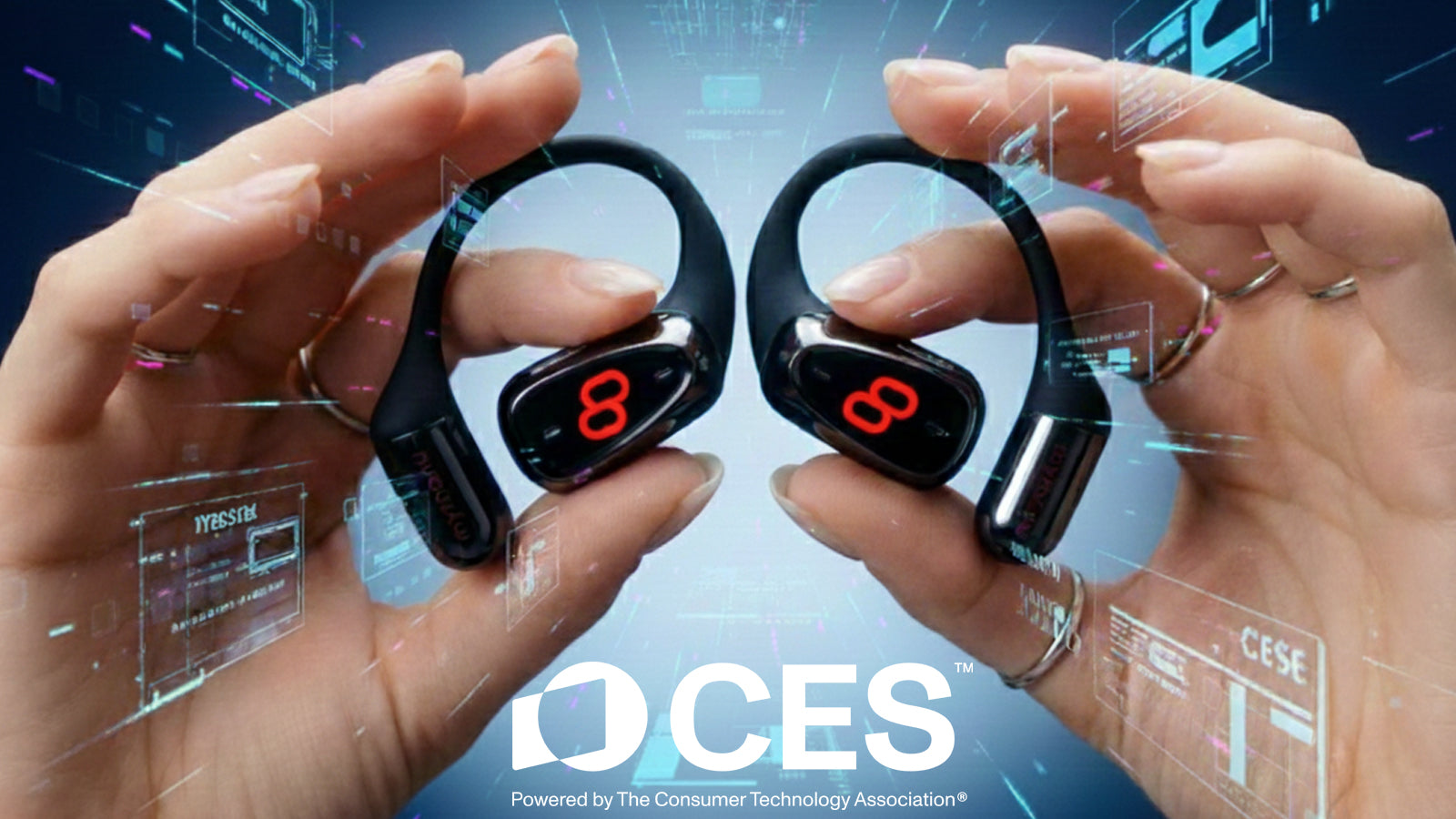
The Mymanu Orb was the first product in the world to combine open-ear acoustic architecture with full real-time translation. Its design philosophy — sound-first, presence-first, never blocking the wearer from their environment — has since become the template that the rest of the industry is now scrambling to imitate.
Live Call Translation Earbuds — The Feature Most Devices Quietly Lack
Here is something the marketing copy rarely admits: most translation earbuds cannot translate phone calls.
They can translate a face-to-face conversation. They can sometimes translate a video you're watching. But a live phone call — where the other person's voice is travelling through a cellular network rather than the air around you — has historically defeated them. The audio doesn't reach the earbud's translation pipeline. It bypasses it entirely.
This matters enormously. In an era of remote work, distributed teams, and global business, most of the multilingual conversations professionals have don't happen in person. They happen on the phone, in Zoom, on Microsoft Teams, in WhatsApp.
What Live Call Translation Actually Enables
A pair of live call translation earbuds intercepts the audio from your phone — whether it's a regular phone call, a Zoom meeting, a Teams huddle, or a WhatsApp voice note — and applies the same real-time translation pipeline you'd get in a face-to-face conversation. You hear the other person's voice translated into your language. They hear your voice translated into theirs.
Real-world applications include:
- Closing deals with overseas suppliers without an interpreter on the line
- Joining international Zoom meetings without subtitles or constant re-asking
- Calling family members who speak a different language and feeling the warmth, not the wall
- Supporting customers and clients in their native tongue from anywhere in the world
- Handling emergencies abroad — calling a doctor, a taxi, a landlord — in real time
The Mymanu Orb was the world's first consumer earbud to deliver live call translation across more than 40 languages, including Mandarin, Japanese, Korean, Arabic, Hindi, Spanish, German and French. According to a Cult of Mac review, the experience feels closer to a personal interpreter on the line than a piece of software working in the background — which is exactly the point.
9 Features That Genuinely Matter When Buying Translation Earbuds
There's an enormous amount of marketing noise around translation devices. Let's cut through it. These are the nine specifications and capabilities that materially affect your day-to-day experience.
1. Translation Latency
The time between someone finishing their sentence and you hearing the translation. Anything above one second feels clunky. The current best is around 0.2–0.5 seconds. Below 0.7 seconds is the threshold for "natural conversation."
2. Language Coverage
The number of languages supported sounds important, but it's a vanity metric. What matters is whether the languages you actually need are translated well. A device that covers 40 languages brilliantly is more useful than one that covers 144 mediocrely. Check accuracy on your specific language pair before buying.
3. Accent and Dialect Recognition
A good translation earbud should understand Glaswegian English, Mexican Spanish, and Egyptian Arabic — not just textbook versions. Look for products that explicitly mention accent training, regional variants, or "X languages and Y accents."
4. Open-Ear vs In-Ear Design
Covered above. For frequent travellers, business professionals on long days, and anyone who values safety and comfort, open-ear translation earbuds win decisively. For users who only need translation in controlled, quiet environments, in-ear can work.
5. Live Call Translation
Either the earbuds translate phone calls and conferencing apps, or they don't. Verify this directly with the manufacturer — many products call themselves "translation earbuds" but only translate face-to-face speech. For business use, this is non-negotiable.
6. Battery Life
Look for at least 6 hours of continuous translation per charge, with a case that adds 24–35 additional hours. Translation is computationally hungry and drains batteries faster than music playback, so headline figures can mislead.
7. Subscription Model
A worrying number of translation earbuds require monthly subscriptions to unlock their full feature set. Read the fine print. The best products — translation earbuds without subscription — give you everything on day one, with free lifetime app updates.
8. IP Rating and Durability
If you're travelling, you'll be caught in rain, exposed to sweat, and dropped on hard surfaces. IPX5 is the practical minimum; it means the earbuds can survive light rain and workouts without issue. The official IEC IP rating standard is worth understanding if you're buying for serious travel.
9. Third-Party App Compatibility
The best wireless translator earbuds integrate with the apps you already use — Zoom, Microsoft Teams, WhatsApp, Skype, Google Meet — rather than forcing you into a proprietary ecosystem. Lock-in is a red flag.
Translation Earbuds for Travel: A Practical Guide
If you're buying primarily for travel, a few specific factors matter more than they would for office use.
Lightweight, all-day comfort. Long-haul flights, full days of sightseeing, and overnight buses mean you might wear the earbuds for 10–12 hours. Anything that pinches, presses, or causes fatigue is a non-starter. Open-ear designs almost always win here.
Offline capability. Translation earbuds typically rely on a phone-based cloud service for processing. That's fine in central Tokyo or downtown Barcelona, but useless on a Cambodian beach or a Greek ferry. Look for models with downloadable offline language packs covering at least 8–13 core languages.
Accent breadth. As any traveller knows, the Spanish spoken in Madrid is not the Spanish spoken in Buenos Aires. The Arabic of Cairo is not the Arabic of Riyadh. Earbuds trained on a broad range of regional accents perform dramatically better in the real world.
Discretion. Some travellers feel awkward visibly using a translation device when haggling at a market or chatting with a host family. Open-ear designs are visually less imposing than chunky in-ear translators — they look like ordinary fitness earbuds.
Reliable hardware. Sweat, rain, dust, and the occasional accidental drop. IPX5 is the baseline, and a sturdy charging case matters more than you'd expect. The case should be small enough to live in a coat pocket, not large enough to need its own bag.
For frequent travellers, you can dive deeper into open-ear, AI-powered earbuds for travel and how they handle the real-world friction of moving through unfamiliar countries.
Translation Earbuds for Business Meetings and Remote Work
The use case that has quietly become the largest in the category is not travel — it's business.
According to research tracked by the Nimdzi Language Industry Report, the global language services market continues to grow year on year as more companies operate across linguistic borders. The same principle that drives that growth applies to professional relationships: trust is built faster, and deals close more reliably, when both parties can communicate in their first language.
Translation earbuds are now a regular fixture in:
- International sales calls. A British BDR closing a Korean account without an interpreter changes the unit economics of cross-border sales.
- Multilingual Zoom meetings. Subtitles work, but they fracture eye contact and conversational flow. Earbuds restore both.
- Remote international teams. Daily standups across English, Portuguese and Mandarin become possible without anyone code-switching exhaustively.
- Customer support. Agents can take calls in any language without specialist hires.
- Negotiations and diplomacy. Where tone and pace matter, in-ear interpretation gives professionals the rhythm of a native conversation.
For these use cases, live call translation is the make-or-break feature. Earbuds without it are simply not solving the actual problem.
Translation Earbuds Without Subscription: Why It Matters
Here is a pattern that should make any buyer cautious. A device costs £200 upfront. It claims to translate "50 languages." Then, deep in the app, you discover that 40 of those languages require a £9.99 monthly subscription. Cancel the subscription and your £200 device becomes a £200 paperweight for most of its advertised capability.
This is increasingly common in the translation hardware space, and it's exactly the kind of pricing model that erodes consumer trust. A well-built device should deliver its core promise on day one, without ongoing fees.
When evaluating translation earbuds without subscription, ask:
- Are all advertised languages available out of the box?
- Are app updates and translation engine improvements free for life?
- Is offline translation included, or behind a paywall?
- Does live call translation require a separate paid tier?
The cleanest answer is "everything is included." The most expensive answer is to discover, six months in, that it isn't.
How to Choose the Right Translation Earbuds in 2026
To simplify the decision, here is a framework based on what most people actually use translation earbuds for.
If you mainly travel for leisure → prioritise open-ear comfort, offline language packs, IPX5 rating, and broad accent support. Pure conversation mode is enough; live call translation is a bonus.
If you mainly travel for business → live call translation is essential. So is third-party app compatibility (Zoom, Teams, WhatsApp). Open-ear comfort matters because you'll wear them through long days.
If you work remotely with international teams → live call translation is the headline feature. Battery life for full-day calls matters more than offline capability. Audio fidelity for music and standard calls is also a factor since these will likely become your everyday earbuds.
If you're learning a new language → real-time transcription and translation playback are useful learning tools. Look for models that provide on-screen transcripts and let you replay translations. Open-ear designs help you naturally hear the original speech alongside the translation.
If you have multilingual relationships or family → comfort, all-day wearability, and warmth-of-experience matter more than spec sheets. Open-ear designs feel less like a "translator" and more like a quiet helper, which most users prefer in personal settings.
Why Mymanu Orb Stands Apart in the Translation Earbuds Market

Most translation earbuds choose a lane: either they're optimised for face-to-face conversation, or they're optimised for audio quality, or they're optimised for travel ruggedness. Few do all three well, and almost none extend their reach into the world of live phone calls and video conferencing.
The Mymanu Orb was designed around a different question: what if a single pair of earbuds could handle every kind of multilingual conversation a modern person actually has?
The result is a device that combines:
- Open-ear acoustic architecture that lets you stay aware of your surroundings while hearing translations clearly.
- Live call translation across more than 40 languages — a category-defining capability, not an afterthought.
- Real-time face-to-face translation with sub-second latency and broad accent support.
- Audio and video content translation, so foreign-language podcasts, lectures and YouTube videos become accessible in real time.
- Live transcription for meetings, classes, and interviews.
- Integration with third-party apps including Zoom, Microsoft Teams and WhatsApp.
- IPX5 water resistance and up to 6 hours of battery per charge, plus a charging case that extends total runtime to around 35 hours.
- No subscription. Everything you see on the box is what you get, for life.
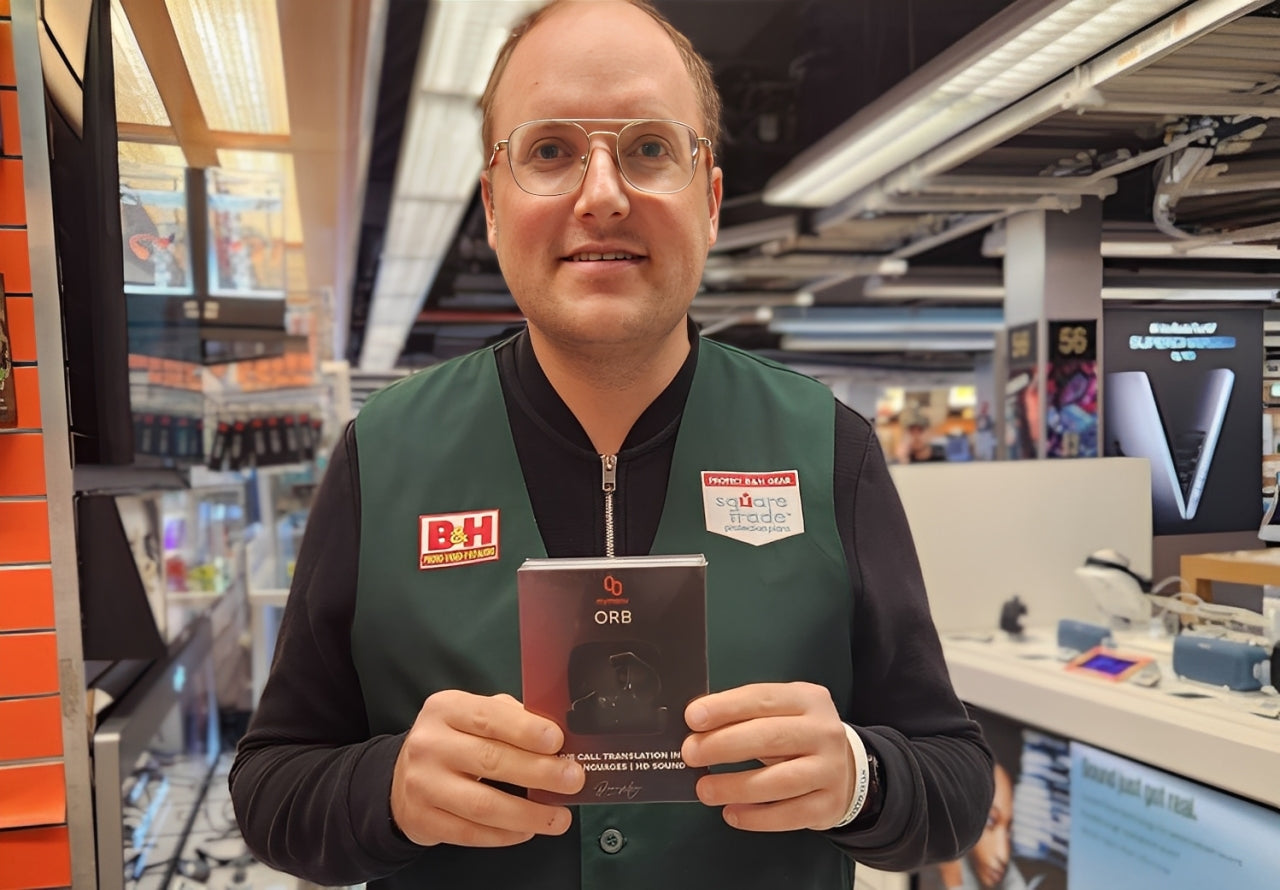
The Orb has been recognised by Cult of Mac and major retailers including B&H Photo Video as one of the most genuinely useful additions to the translation earbuds category. More importantly, it's been praised for the experience it doesn't impose: no awkward earbud-swapping, no panicked toggling between modes, no monthly bill.
If you'd like to read the full story behind how the Orb came to be, the Mymanu newsroom goes into depth on the engineering and design philosophy.
Final Thoughts
Translation earbuds have crossed a threshold. They are no longer experimental gadgets for early adopters; they are practical tools for anyone whose work, travel or relationships cross language boundaries. The technology has matured, latency has collapsed, and a new generation of open-ear translation earbuds with live call translation has expanded what the category can do — making translation feel less like using a device and more like having a quiet, multilingual companion.
The decision now isn't whether to consider translation earbuds. It's which pair fits the way you actually live and work.
If that means you want a device that handles face-to-face conversations, live phone calls, video meetings, and foreign-language content — all without subscriptions, without blocking your ears, and without compromising on comfort — the Mymanu Orb is the clearest answer in the category today.
Next Step
Ready to break the language barrier on your own terms?
Discover the Mymanu Orb — the world's first open-ear, live call translation earbuds →
Real-time translation in 40+ languages. Open-ear design. Live call translation. No subscription. Free worldwide shipping options available. Join thousands of travellers, business professionals and global families who are already speaking every language fluently — without needing to learn them.

Frequently Asked Questions About Translation Earbuds
Got a question? We are here to answer
Share:
How Do Translation Earbuds Work in Real Life?
Best Earbuds for International Travel in 2026: Why Open-Ear Translation Wins