



Translation earbuds are AI-powered devices that deliver real-time spoken language translation directly into a listener’s ear, making them one of the most practical classroom translation tools available to educators today. In multilingual schools, where a single class may include students speaking Mandarin, Arabic, Spanish, and Portuguese, these devices let every learner follow instruction without a pull-out session or a separate interpreter. The core translation earbud uses in classrooms range from live lecture comprehension to parent-teacher meetings, and this guide covers all of them with the specificity you need to make an informed decision for your school.
1. real-time lecture comprehension for ELL students
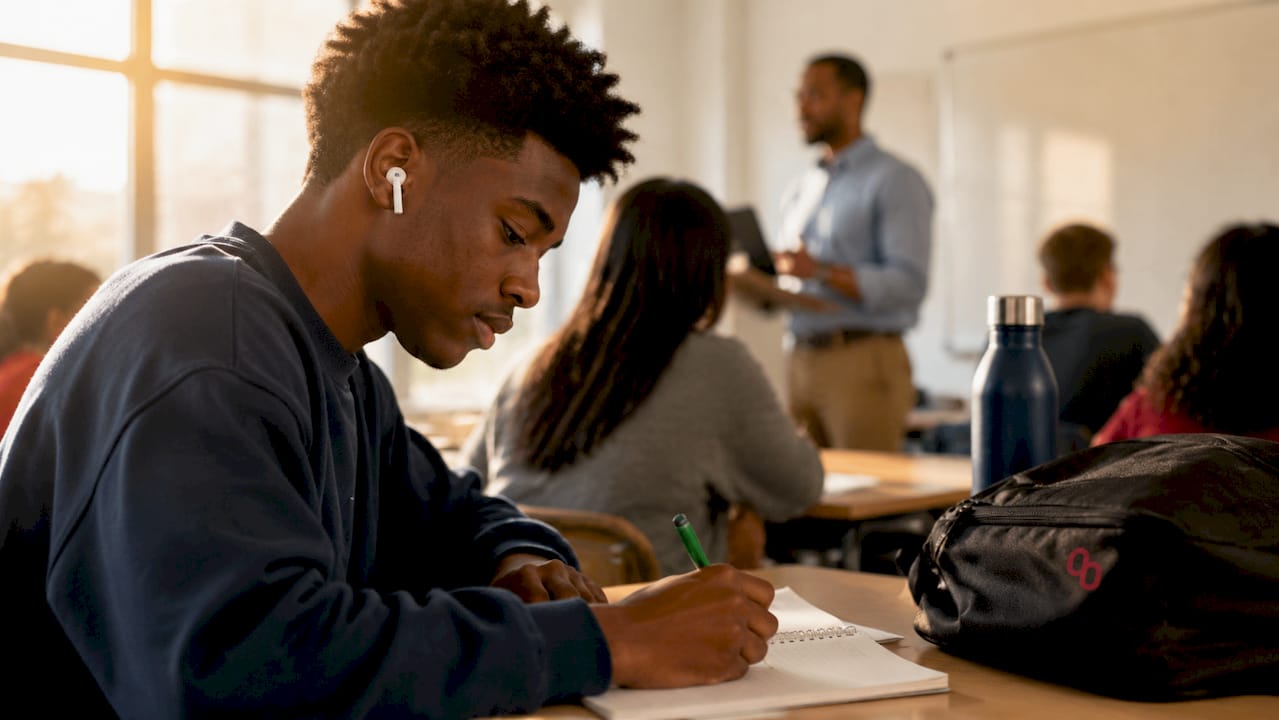
Translation earbuds give English Language Learners (ELL) immediate access to spoken instruction without removing them from the classroom. Devices such as the Myjuno Translation Earbuds capture speech from up to 8 metres and support 60+ languages with minimal delay. That range matters in a standard classroom where a student may sit at the back of the room, several rows from the teacher.
Lectures typically run at around 150 words per minute. For a student still developing English proficiency, that pace creates a constant risk of falling behind. Translation earbuds act as a cognitive safety net, catching missed details in real time so students stay on track while their language skills develop naturally alongside the technology.
2. private translation summaries without disruption
One of the most underused translation earbud uses in classrooms is the delivery of private, translated summaries during whole-group instruction. The Mymanu clik pro system, for example, allows teachers to deliver immediate translated summaries to ELL students in 50+ languages without interrupting the lesson for the rest of the class. This removes the need for a bilingual aide to whisper translations or for the student to be pulled out entirely.
The practical benefit is significant. Students remain present, engaged, and socially included. Teachers without specialist ELL training can still deliver accessible instruction, which matters enormously in schools where specialist staffing is limited.
3. multilingual peer-to-peer group work
Group activities in multilingual classrooms often stall when students cannot communicate directly with one another. Translation earbuds resolve this by enabling real-time spoken exchange between students who share no common language. The Myjuno Pro platform provides instant speech translation in over 100 languages, making it practical for spontaneous peer collaboration rather than just structured teacher-led instruction.
When students can discuss, debate, and problem-solve with classmates regardless of language, the quality of group work improves noticeably. It also builds social confidence in learners who might otherwise stay silent during collaborative tasks.
4. supporting oral language production
Translation earbuds support not just listening but also speaking. When a student hears content at a level they can understand, they are far more likely to attempt a verbal response. This aligns with the principle of comprehensible input, where learners need to understand roughly 95% of what they hear before they can produce language effectively. The Mymanu CLIK PRO system is specifically designed to support oral production tasks by allowing students to engage at their own pace toward that comprehension threshold.
For heritage language learners, this is particularly valuable. A student who speaks Spanish at home but reads and writes primarily in English can use earbuds to reinforce formal academic vocabulary in their heritage language, strengthening both linguistic identities simultaneously.
5. facilitating parent-teacher communication
Language barriers do not stop at the classroom door. Parent-teacher meetings are frequently complicated when families speak little or no English, and professional interpreters are expensive and not always available at short notice. Translation earbuds offer a practical, lower-cost alternative for these conversations.
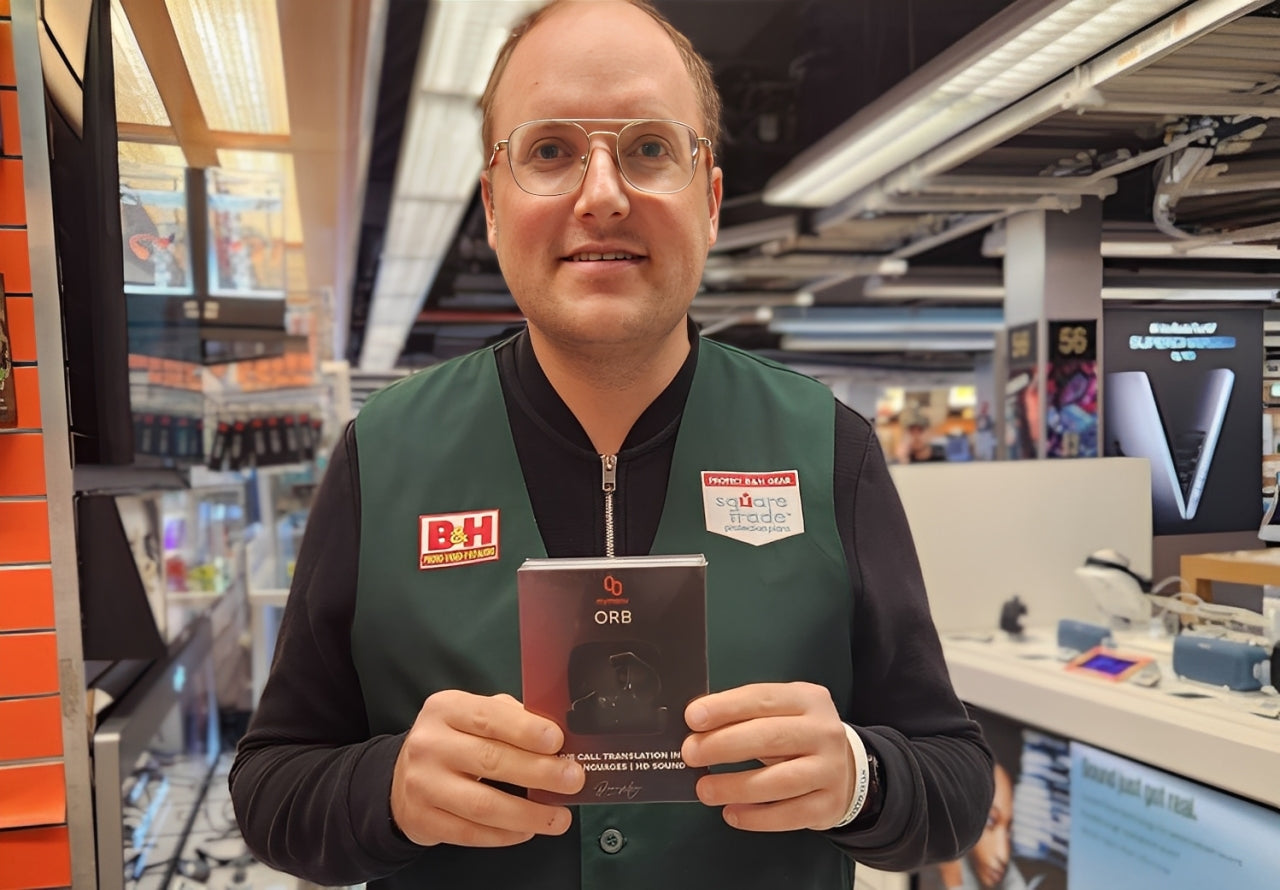
With a device like the Mymanu Orb, a teacher and a parent can hold a natural, face-to-face conversation with real-time translation running through the earbuds. The interaction feels personal rather than mediated, which builds trust and encourages family engagement with the school.
6. preserving non-verbal communication
Discreet earbuds preserve the non-verbal dimension of classroom interaction in a way that phones and tablets cannot. Non-verbal cues account for 70% of communication, including eye contact, facial expressions, and gestures that are critical to learning. When a student is looking down at a phone screen to read a translation, they miss all of that.
Earbuds keep a student’s gaze forward and their attention on the teacher. This is not a minor detail. It is the difference between a student who is present in the room and one who is technically there but cognitively elsewhere.
Pro Tip: If your school is evaluating earbuds versus screen-based translation apps, observe a lesson using each method and count how often students make eye contact with the teacher. The difference is usually immediate and striking.
Here is a summary of how earbuds compare to handheld translation devices in a classroom context:
| Feature | Translation Earbuds | Handheld Device or Phone |
|---|---|---|
| Eye contact maintained | Yes | No |
| Disruption to others | Minimal | Moderate to high |
| Social stigma | Low | Higher |
| Speed of translation | Real-time | Real-time but screen-dependent |
| Ambient noise reduction | Yes, with good mic placement | Variable |
7. reducing stigma for language learners
A student using a phone to translate in class draws attention. Earbuds do not. This distinction matters more than many administrators realise. Adolescents in particular are acutely sensitive to anything that marks them as different, and visible translation tools can discourage use precisely when use is most needed.
Earbuds reduce ambient noise and distractions, creating a focused learning environment that accommodates diverse learner needs without signalling those needs to the whole room. The discreet form factor means students are more likely to use the technology consistently, which directly improves outcomes.
8. supporting heritage language learners
Heritage language learners occupy a unique position. They often have conversational fluency in a language spoken at home but lack the academic vocabulary needed for formal instruction in that language. Earbuds that support how earbuds support heritage language learners in this context work by reinforcing formal register and subject-specific terminology in the student’s first language while they engage with English-medium content.
This dual reinforcement strengthens both languages rather than replacing one with the other. Schools that take heritage language development seriously will find earbuds a practical tool for this goal, particularly in subjects like science and history where vocabulary is dense and domain-specific.
9. comparing leading translation earbud technologies
Not all devices perform equally in a classroom setting. Here is a practical comparison of the leading options educators are currently evaluating:
| Device or Platform | Languages Supported | Offline Mode | Classroom Range | Key Limitation |
|---|---|---|---|---|
| others | 50 | Yes | Up to 8 metres | Requires smartphone pairing |
Offline capability deserves particular attention. Many school buildings, especially older ones with thick walls or basement laboratories, have unreliable Wi-Fi. A device that drops translation when connectivity fails is not suitable for daily classroom use. Offline language packs are essential for consistent performance in these environments.
10. best practices for classroom integration
Getting the most from interpretation earbuds in education requires preparation, not just purchase. Follow these steps to integrate devices effectively:
-
Sync devices before the lesson begins. Connecting earbuds and downloading language packs 5–10 minutes before class prevents technical delays that disrupt instruction.
-
Position the microphone near the speaker. Placing a paired smartphone on the teacher’s podium rather than leaving it in a student’s pocket significantly improves translation accuracy by reducing ambient noise interference.
-
Encourage student transparency. Translation earbuds are generally accepted in classrooms similarly to hearing aids, but students should inform their teachers. This allows the teacher to manage classroom dynamics and adjust pacing when needed.
-
Use earbuds as a comprehension support, not a shortcut. Students who rely entirely on translation without attempting to process the target language will not develop proficiency. Frame the device as a scaffold that reduces over time as language skills grow.
-
Include earbuds in lesson planning. Teachers who plan for earbud use, for example by speaking at a measured pace or pausing after key points, get better outcomes than those who treat the device as invisible.
Pro Tip: Build a short induction session for students new to using translation earbuds. Ten minutes spent on pairing, mic placement, and etiquette prevents the majority of classroom disruptions before they start.
Key takeaways
Translation earbuds are most effective in classrooms when used as a structured comprehension scaffold rather than a passive translation service.
| Point | Details |
|---|---|
| Real-time lecture access | Devices like Mymanu clik pro support 60+ languages from up to 8 metres, keeping ELL students on pace. |
| Offline mode is non-negotiable | Download language packs before class to maintain translation during Wi-Fi outages in older buildings. |
| Mic placement determines accuracy | Position the paired smartphone near the teacher, not the student, to reduce noise and improve output. |
| Discreet design reduces stigma | Earbuds preserve eye contact and social inclusion in ways that phones and tablets cannot match. |
| Transparency improves outcomes | Students who inform teachers of their device use benefit from adjusted pacing and better classroom management. |
What we have learnt from watching these devices in action
At Mymanu, we have spent considerable time observing how translation earbuds perform in real classroom conditions rather than controlled demonstrations. The results are genuinely encouraging, but they come with a clear pattern. Schools that treat earbuds as a plug-and-play fix see modest gains. Schools that integrate them into a deliberate language support strategy see transformative ones.
The most common mistake we observe is using earbuds as a permanent crutch rather than a temporary scaffold. A student who hears every word translated without ever attempting to process the original language is not acquiring English. They are consuming content in their first language through an English-medium delivery system. That is not the goal.
What does work is pairing earbud use with explicit language instruction. A student uses the device to follow the lesson, then participates in a structured speaking task without it. The earbud provides the comprehension foundation; the task builds the production skill. This combination is where the real progress happens.
We are also watching AI translation quality improve at a pace that was not predictable even three years ago. The latency on current devices is low enough that the translation no longer feels like a separate track. It feels like the lesson. That shift in user experience changes everything about how students engage with the technology. We expect the next generation of classroom-ready earbuds to close the remaining gap between translated and native-language instruction almost entirely.
Our advice to administrators is straightforward. Pilot thoughtfully, measure engagement rather than just comprehension scores, and adapt based on what your specific student population actually needs. The technology is ready. The question is whether your implementation plan is.
— Mymanu
Bring real-time translation into your classroom
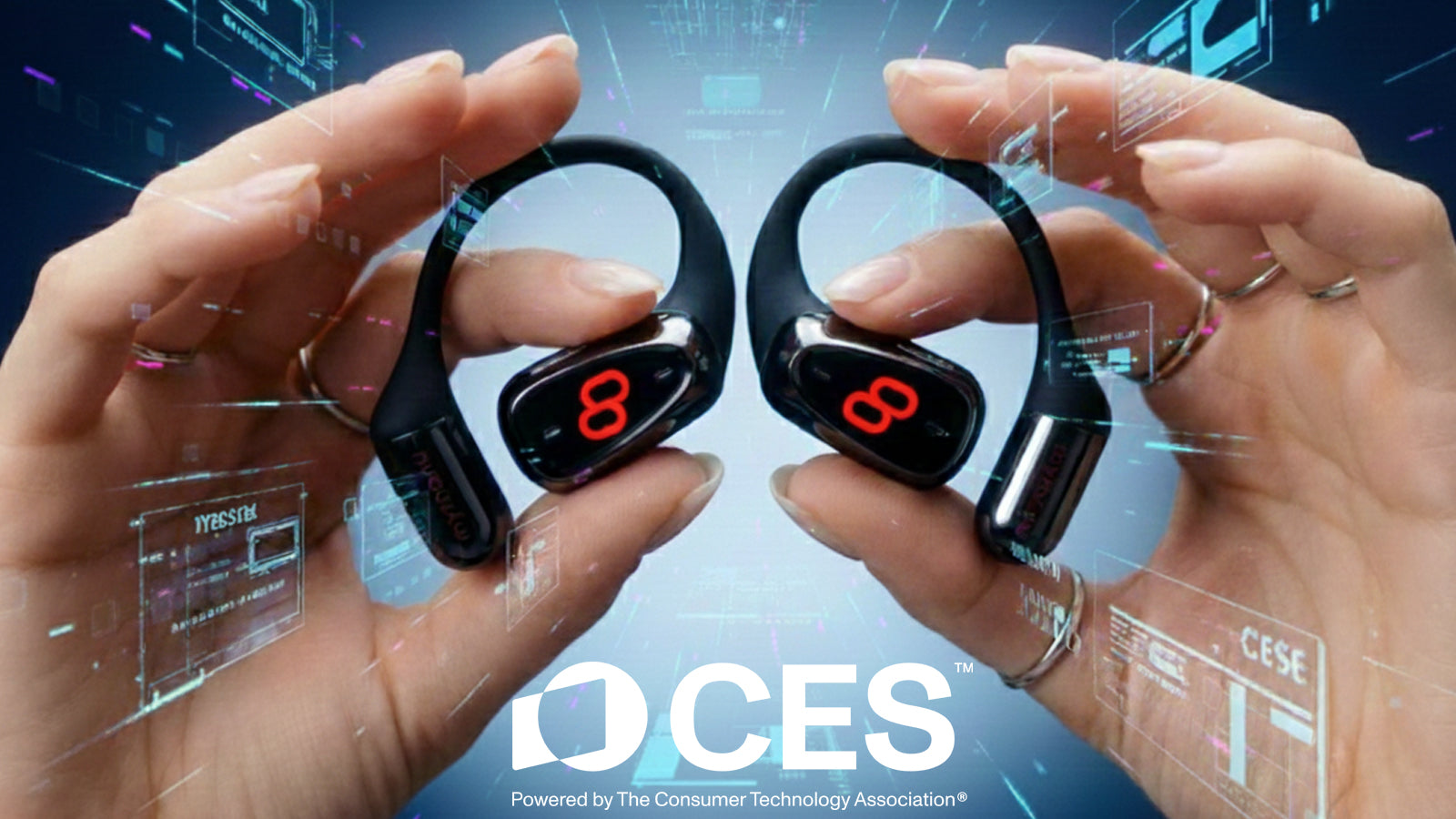
If you are ready to move from evaluation to implementation, Mymanu’s translation earbuds are built for exactly this kind of real-world communication challenge. The Mymanu Clik range supports real-time translation across 50+ languages, includes offline mode for schools with unreliable connectivity, and pairs with a straightforward app that requires no specialist technical knowledge to set up.
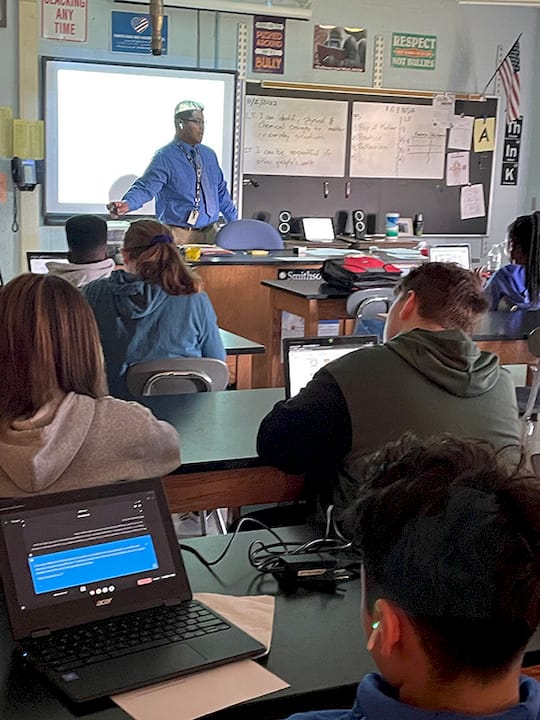
Whether you are supporting ELL students during whole-group instruction, facilitating multilingual parent meetings, or building a more inclusive classroom environment, the Mymanu Clik S offers a practical, tested solution. Visit mymanu.com to explore the full range and find the right fit for your school’s needs.
FAQ
What are translation earbuds used for in schools?
Translation earbuds are used in schools to provide real-time spoken language translation for ELL students during lessons, peer group work, and parent-teacher meetings. They allow multilingual learners to access instruction without leaving the classroom or relying on a separate interpreter.
How do earbuds support classroom language instruction?
Earbuds support language instruction by delivering comprehensible input directly to the learner, allowing them to follow content at pace while developing proficiency. Platforms like Vurbo and the M2 system are specifically designed to keep ELL students engaged during whole-group lessons.
Do translation earbuds work without an internet connection?
Many devices, including the Mymanu CLIK PRO AI Translation Earbuds and Mymanu Clik, offer offline language packs that maintain translation during Wi-Fi outages. Downloading these packs before class is strongly recommended for schools with unreliable connectivity.
Are translation earbuds allowed in classrooms?
Translation earbuds are generally accepted in classrooms in a similar way to hearing aids, provided students inform their teachers. Transparency about device use allows teachers to manage pacing and classroom dynamics more effectively.
How do you get the best translation accuracy in a classroom?
Position the paired smartphone microphone near the teacher, such as on the podium, rather than leaving it with the student. This single adjustment significantly reduces ambient noise interference and improves translation output quality.
Compartir:
Clean Earbuds: Maintain Audio Performance in 2026
Best Real-Time Translation Earbuds for Travelers and Professionals