


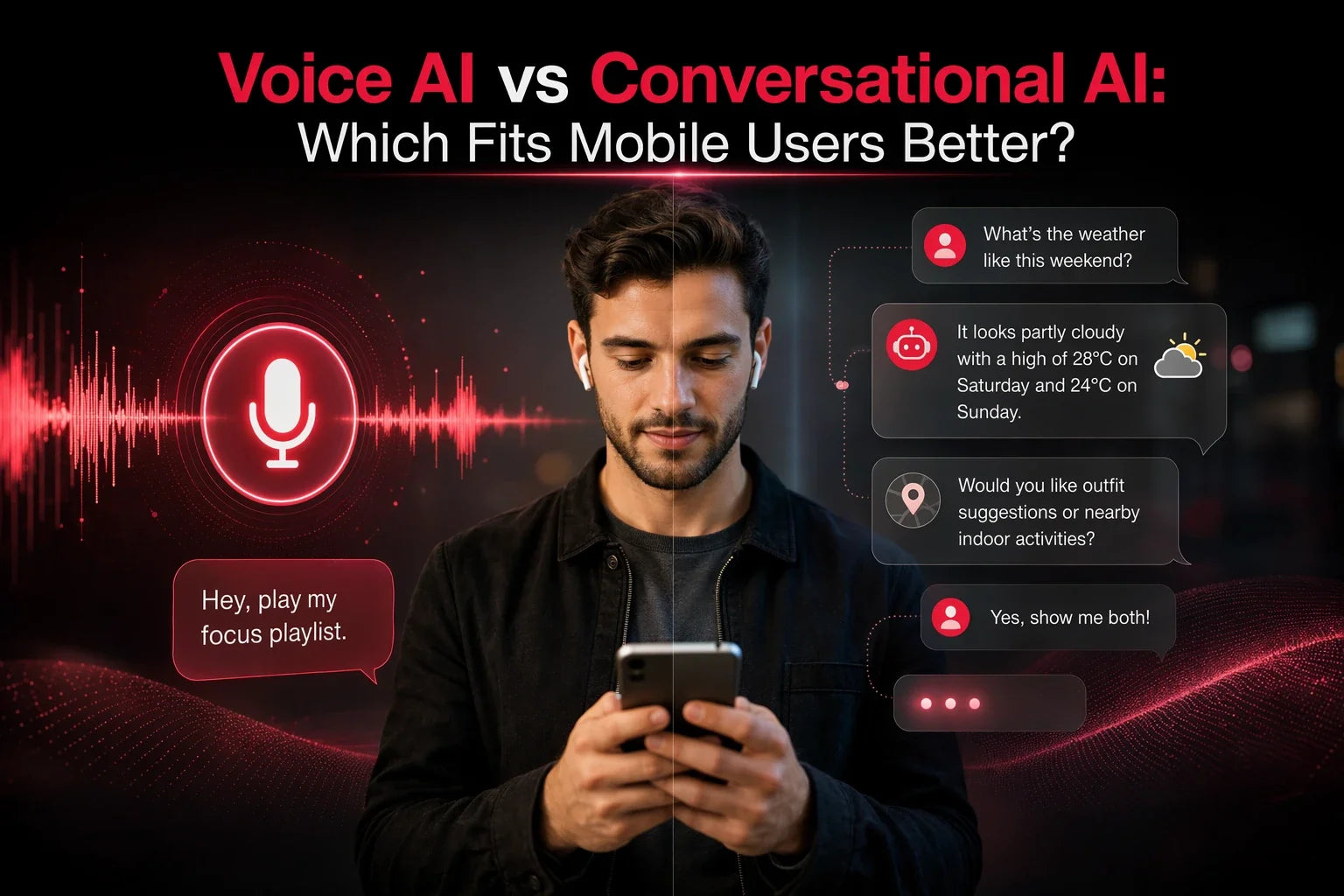
Quick Summary: Voice AI is best for quick, hands-free tasks like calls and commands when on the move. Conversational AI suits longer, context-rich interactions such as travel planning or messaging. For mobile users, devices like Mymanu support both types, offering quick responses and detailed conversations. The choice depends on whether speed or depth of interaction matters more during different activities.
For mobile users, voice AI is often best for quick, hands-free help, while voice AI and conversational AI split when chats get longer and more complex. If you move through airports, trains, calls, and music all day, voice AI in a light audio-first device like Mymanu ORB usually fits better. We’ve spent years testing mobile sound, language use, and real travel habits, so this guide keeps the focus on comfort, presence, and clear communication.
Voice AI vs Conversational AI at a Glance
| Voice AI | Conversational AI | |
|---|---|---|
| Primary use | Quick spoken interaction | Context-rich dialogue |
| Mobility | High | Medium to high |
| Best for | Travel, calls, and on-the-go assistance | Longer exchanges and guided interactions |
| Hands-free experience | Strong | Moderate to strong |
| Sound and comfort | Depends on device design | Depends on interface and device |
How Voice AI and Conversational AI Compare
Voice AI
Voice AI is the speech-first option. It takes spoken prompts and replies fast, which makes it a strong fit for travel, calls, and mobile help. A voice user interface is built for hands-free, eyes-free use, so it suits people moving through stations, taxis, and busy streets.
Conversational AI
Conversational AI is the broader layer. It handles back-and-forth dialogue with more memory and flexibility, often across voice or text, which the W3C notes in assistant and chatbot design. It's better suited to longer exchanges, guided tasks, and replies where context matters.
How They Work on the Move
Your phone use changes when you’re walking, driving or switching between apps. Voice AI is best for short, fast actions like calling, dictating or skipping a track. Conversational AI is better when you need follow-up, memory and clearer back-and-forth. Speech recognition turns spoken words into text or commands, which is why voice tools feel quicker on the move.
If your hands are busy and your eyes need to stay up, speed matters more than long answers.
Sound-first design helps most in moments where screens get in the way:
- walking through an airport
- changing music mid-run
- replying during a commute
Research from NHTSA found voice interfaces can reduce visual demand versus manual controls, but they still add mental load. That’s the key choice: use voice AI for quick commands, use conversational AI when context matters more than raw speed.
Travel, Calls, and Everyday Communication
Travel rewards speed. If you need to catch a platform change, ask for allergy details, or follow a guide in Madrid, voice AI often wins because it reacts fast. Google says Live Translate now works in 70+ languages and is built for low-latency speech on mobile and headphones, which suits real trip moments Google’s 2026 update.
Calls and mixed use need more than speed. On a supplier call, in voice notes, or while switching from music to translation, conversational AI helps more because it keeps context and handles back-and-forth better. Research on smart tourism also shows a real trade-off between translation quality and delay in live speech systems Scientific Reports.

Mymanu fits naturally here. Mymanu ORB and Mymanu CLIK PRO make sense for people who want audio, calls, and translation in one wearable setup, without pulling a phone out every minute.
Which Fits Your Needs Best?
Choose voice AI if you live in short bursts
Pick voice AI when you want speed over depth. It works best for quick actions like sending a text, starting music, setting a timer, or checking the weather. Google’s mobile Gemini help page shows that quick voice actions still matter on phones, especially for calls, messages, and hands-free tasks on Android Google’s Gemini mobile app help.

Choose conversational AI if the conversation needs more context
Pick conversational AI when your request builds over several turns. It’s better for trip planning, language help, call support, and follow-up questions that depend on memory. Recent ACL research on context-aware dialogue shows context-dependent instructions are harder, but essential when a conversation shifts or needs correction context-aware language understanding research.
If you switch between music, travel, and live conversation, you’ll likely want both.
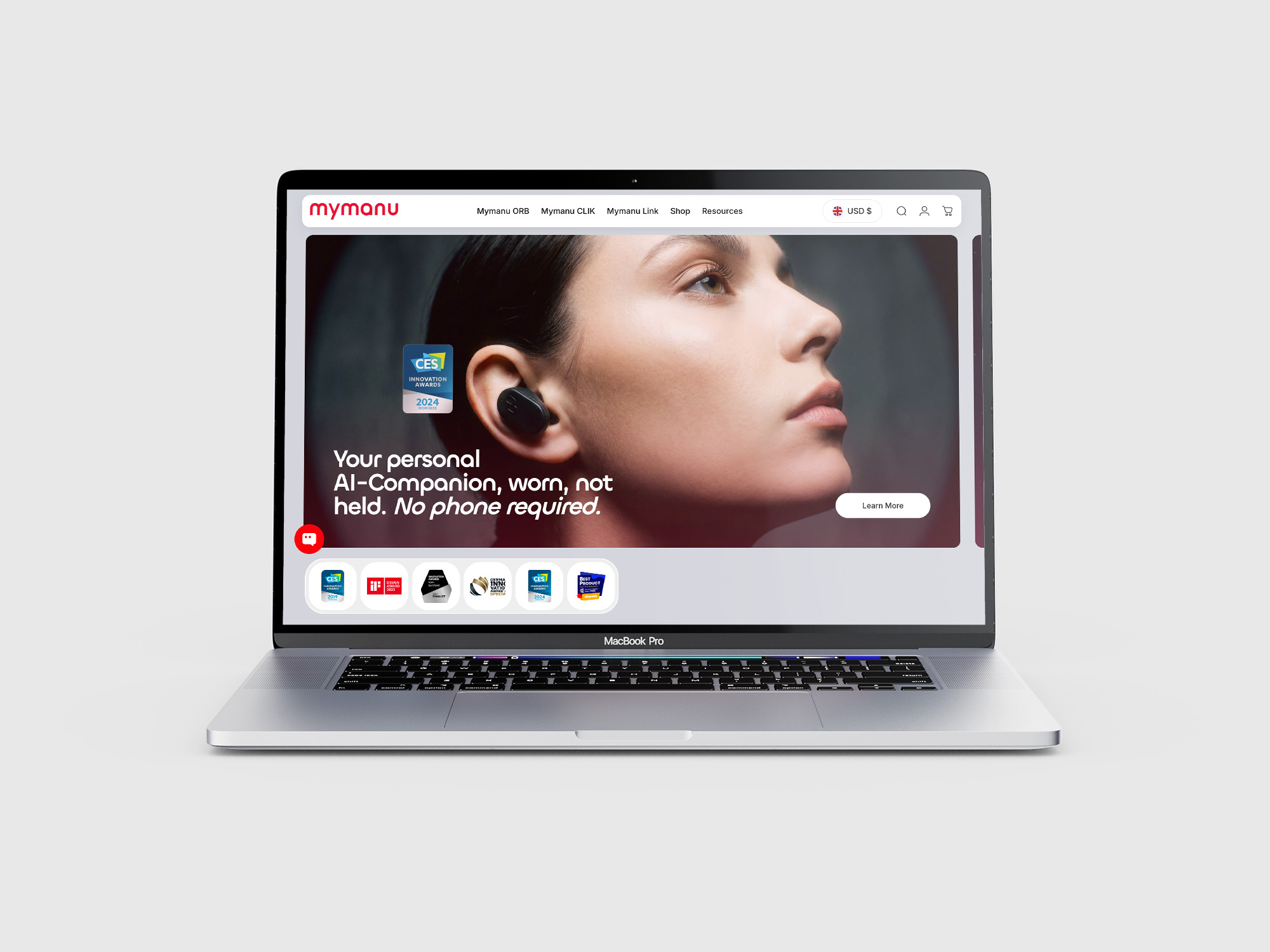
If you want mobile AI that helps without pulling you out of the moment, start with Mymanu. Its smart audio tools support clearer calls, travel chat, music and real-time communication on the move.
Frequently Asked Questions
Q1: Compare voice AI devices for travel?
For travel, pick voice AI if you need fast speech help in taxis, stations, or cafés. Pick conversational AI if you want fuller back-and-forth help, like planning routes or fixing bookings. Mymanu suits mobile users who care about comfort, sound, and real-time communication.
Q2: Is conversational AI better for calls and messaging?
Yes, for many people. Conversational AI handles context better, so it can draft replies, summarise chats, and keep a call flowing. Voice AI is quicker for short commands like calling a contact, dictating a note, or changing music.
Q3: Which one feels less distracting on the move?
Voice AI usually feels lighter because it does one job fast. That matters when you're walking, commuting, or switching between apps. Conversational AI can be more helpful, but it asks for more attention and screen time if the flow gets longer.
Conclusion
Voice AI wins for speed and hands-free moments. Conversational AI wins for richer help. Mobile assistants are already shifting towards more natural dialogue, as Google’s mobile move to Gemini shows.


Compartir:
7 AI Translation Earbud Use Cases for Travel in 2026
Cross-Cultural Communication Tools for Better Global Conversations